The borrower experience has become the most critical differentiator in modern lending. It refers to the complete journey a borrower has with a lender, from loan application to repayment. It includes application speed, communication, document handling, loan tracking, and overall transparency. A strong borrower experience focuses on simplicity, speed, and digital convenience.
Community banks and credit unions reading the research on declining borrower satisfaction and evaluating what makes a good borrower portal will arrive at a specific, legitimate question: how does a relationship-driven institution deploy this technology without undermining the thing that makes it competitive in the first place? That question deserves a direct answer, and the data makes it easier to give than most CLOs expect.
The Federal Reserve Banks’ 2024 Small Business Credit Survey found that applicants at small banks were fully approved 54% of the time, outperforming every other lender type. That is not a marginal edge. It is a structural advantage built on relationship depth, local market knowledge, and the kind of soft underwriting information that no algorithm has yet replicated at scale. Yet the same borrowers generating that approval rate are forming their digital experience expectations from every other service they use daily, and the gap between what they experience there and what they encounter in a commercial loan process is growing.
That gap is not a technology failure. It is an infrastructure gap. Community banks and credit unions are uniquely positioned to win the community bank borrower’s experience competition precisely because they already have what technology cannot replicate. The only question is whether their platform lets them deliver it.
What Is Borrower Experience?
Borrower experience refers to the overall journey a borrower has when interacting with a lender, from applying for a loan to submitting documents, receiving updates, completing requirements, making payments, and managing the loan after closing. A good borrower experience makes these interactions simple, transparent, secure, and convenient while reducing delays and unnecessary communication.
– 54% of small bank applicants are fully approved, showing strong relationship-driven lending
– 90% of institutions offer digital applications, but less than 50% deliver end-to-end digital lending
– Borrowers receiving proactive guidance are 2.3x more likely to return
– Digital-first expectations are rising rapidly across all borrower segments
What Are the Key Parts of Borrower Experience?
– Easy loan application: Make it simple for borrowers to apply without unnecessary steps or paperwork.
– Clear communication: Keep borrowers informed with timely updates and easy ways to reach the lending team.
– Simple document submission: Let borrowers securely upload and manage documents in one place.
– Real-time loan tracking: Give borrowers a clear view of where their loan stands and what happens next.
– Easy digital experience: Make everyday tasks quick and straightforward across desktop and mobile.
– Personalized support: Show borrowers the information and tasks that are relevant to their loan.
– Quick responses: Help borrowers get answers without long email chains or unnecessary follow-ups.
– Transparent process: Clearly explain requirements, deadlines, and next steps.
– Convenient payments: Make it easy to view balances, due dates, and payment information.
– Self-service access: Give borrowers 24/7 access to important loan information and documents.
Your Relationship Advantage Is Real, Measurable, and Under Pressure
The case for the community institution model in commercial lending does not rest on sentiment. It rests on documented outcomes. The FDIC’s 2024 Small Business Lending Survey found that small banks use more soft or difficult-to-quantify underwriting information gathered through relationships than large banks do, and that nearly all institutions surveyed emphasized in-person and high-touch practices for developing small business relationships even as they adopted technology elsewhere. The FDIC Chairman summarized it plainly: “From the smallest to the largest banks, small business lending is generally underwritten and approved by people.”
That human judgment advantage shows up directly in approval rates. The 54% full approval rate at small banks is not a coincidence. It reflects a credit evaluation process that incorporates information about the borrower, the business, and the local market that a standardized underwriting model cannot access. And it is producing borrower loyalty: the J.D. Power 2025 U.S. Mortgage Origination Satisfaction Study found that borrowers who received top-quality proactive guidance from their lender were 2.3 times more likely to return for their next loan. The institutions earning that loyalty are the ones doing what community banks already do.
The pressure is real, too. Net satisfaction with online lenders collapsed from 15% to 2% in a single year, according to the Fed SBCS. Application rates at large banks fell from 44% to 39% year over year. Borrowers are not finding the digital-first model as compelling as it looked three years ago. The opportunity for community institutions to capture those borrowers is genuine, but only if they can meet the digital experience expectation that borrowers now carry from every other service they use. The community bank’s borrower experience is the competitive battleground, and the relationship-driven institution is better equipped to win it than any fintech lender.
The Specific Gap That Is Costing Relationship Lenders Their Best Borrowers
The borrower experience research documented in the earlier blogs in this series identified six friction points that define what a poor commercial lending experience looks like in practice: limited visibility into loan status and balances, document exchange scattered across email threads, slow handling of payoff letters and ACH requests, no proactive communication when documents are missing or payments are due, no multi-stakeholder access for business borrowers whose CFO and accountant both need to be involved, and siloed systems that show data that is hours or days out of date.
For a large bank or a fintech, this friction points to damage satisfaction. For a community bank or credit union, they damage something more valuable: the credibility of the relationship. A borrower who chose this institution specifically because of its reputation for responsiveness and personal service feels a sharper disappointment when the digital experience fails than they would at an institution where the expectation was purely transactional. The relationship promise raises the bar, and the digital experience either lives up to it or quietly undermines it.
The Digital Banking Report’s State of Digital Lending found that 90% of financial institutions now have web-based loan applications, but fewer than 50% can handle their products digitally end to end. The institutions on the wrong side of that gap are disproportionately community banks and credit unions, not large banks with dedicated technology teams. A borrower who submits an application through an online form and then receives document requests by email for two weeks has not had a digital experience. They have had a paper process with a digital front door, and that experience does not reflect the relationship quality that the institution has spent years building.
How Does a Loan Management System Enhance the Borrower Experience?
A loan management system makes the borrowing process easier, faster, and more transparent. It brings applications, documents, communication, payments, and loan information into one place, so borrowers don’t have to rely on long email chains or repeated follow-ups.
– Faster communication: Borrowers receive timely updates and notifications.
– Easy document management: They can securely upload, access, and share documents.
– Better visibility: Borrowers can check loan status, requirements, balances, and upcoming payments.
– Simpler payments: Payment details and schedules are easy to access.
– Self-service access: Borrowers can complete tasks and find information without always contacting the lender.
– Consistent experience: A centralized system keeps information organized throughout the loan lifecycle.
Hybrid Engagement: The Model Community Banks Are Best Placed to Own
The J.D. Power research describes the highest-performing lenders as those that have perfected hybrid engagement, blending high-touch advisor relationships with intelligent digital infrastructure. That description is not a fintech profile. It is the community bank and credit union model, upgraded with the infrastructure that makes it sustainable at scale.
The argument is not that technology replaces the relationship manager. It is that technology frees the relationship manager to do what only the relationship manager can do. A lender who spends three hours manually collecting documents, following up on missing items, and reconciling data from separate systems is not delivering relationship value during that time. The commercial lending platform that compresses that administrative work to thirty minutes returns two and a half hours of relationship capacity every day. That capacity can be reinvested in understanding the borrower’s business, structuring a deal that genuinely fits their situation, and maintaining the contact frequency that drives repeat business and referrals.
Satisfaction was 32 points higher when lenders engaged borrowers before active shopping began, according to J.D. Power. That kind of early, proactive engagement is structurally impossible when the relationship manager is buried in document chasing and status calls. Finanta customers have reported a 40% efficiency boost in commercial loan origination and a 30% reduction in funding cycle time as a direct consequence of removing that administrative burden, and those gains translate directly into the relationship capacity that drives retention. Effective commercial loan servicing extends that relationship capacity beyond closing, turning the post-funding period into a continued opportunity to build trust rather than a cost to be minimized.
What the Right Community Bank Commercial Lending Software Actually Looks Like?
The technology investment the previous blogs in this series described, specifically a borrower portal built on the right infrastructure, is a different decision for a community institution than it is for a large bank. Four requirements separate a platform that works for a community bank or credit union from one that works against it.
The first is multi-collateral depth built for commercial lending specifically, not a consumer origination system with commercial fields bolted on. Community banks write Commercial Real Estate, Construction, Equipment, Agricultural, and Specialized Finance loans, often in the same week. A platform that supports 27 collateral types out of the box with fully tailored product lines for each is built for that reality.
A consumer LOS adapted for commercial use produces workarounds, manual exceptions, and the kind of process friction that community bank borrowers notice immediately. Finanta’s community bank lending platform and credit union lending solution were built for this collateral complexity from the ground up, not retro-fitted to it.
The second is white-label deployment under the institution’s own brand. The borrower should never encounter a third-party vendor name anywhere in their digital experience. The platform should feel like the bank’s platform, and the relationship should feel like the bank’s relationship. A white-labeled solution operating under the institution’s brand reinforces the relationship identity rather than introducing a technology layer that sits visibly between the lender and the borrower.
The third is a self-service borrower portal that delivers the capabilities the previous blog in this series identified as the baseline for a portal worth deploying: real-time loan data, two-way document exchange, self-service request handling, proactive notifications, and role-based multi-user access for business borrowers. That portal should feel like the institution’s own environment, not a vendor product the institution is licensing.
The fourth is a plug-and-play architecture that connects to marketplace services for data aggregation, open banking, and alternative underwriting without requiring a custom build, delivered through a SaaS model with a pay-as-you-go subscription structure. This is the pricing and deployment model that makes the technology accessible to institutions operating at community bank and credit union scale, without the capital commitment and implementation timeline of enterprise systems built for institutions ten times the size.
What Hybrid Engagement Looks Like in Practice?
IBC Bank, managing an $8.8 billion loan portfolio across 15,000 loan records, deployed Finanta to build exactly this model. The results were measurable across every dimension that matters to a community institution. IBC funded 2,000 new loans and renewed 1,600 existing loans, achieving 8.9% year-over-year loan growth. Funding cycle time fell by 30%, directly compressing the wait time that is the most consistent source of commercial borrower frustration. The bank’s Audit Readiness Index improved by 34 percentage points, reflecting the kind of structured regulatory compliance posture that examiners increasingly expect and that borrowers experience as a signal that their lender is organized and accountable.
These outcomes are not the result of IBC Bank becoming a fintech. They are the result of an institution that deployed technology to protect and amplify a relationship model that was already working. The loan growth and cycle time improvements freed relationship managers to focus on what they do best while the platform handled the administrative infrastructure that was consuming their time.
“By leveraging Finanta’s comprehensive commercial lending solutions suite, IBC Bank will not only enhance their operational efficiencies but also provide their clients with superior lending products and services tailored to the dynamic commercial lending sector.”Dalia F. Martinez, EVP Corporate Operations, IBC Bank.
If your institution is ready to close the community bank borrower experience gap, book a demo to see how Finanta delivers these outcomes in the context of your loan portfolio.
The research on declining borrower satisfaction documented a real and measurable problem. The borrower portal framework identified the infrastructure that solves it. This blog is the answer to why community banks and credit unions are specifically the institutions most positioned to win with that investment: they already hold the relationship advantage that technology alone cannot manufacture. The variable is whether their platform delivers a digital experience that matches the relationship quality their borrowers already expect from them.
Improving the community bank borrower experience is not a technology project — it is a strategic decision to protect the competitive advantage that the data show is already working. Finanta was built for exactly this deployment model, not to replace the relationship, but to give it the infrastructure it needs to scale. The institutions that act now will be the hardest to displace as borrower expectations continue to rise.
How Are Digital Mortgage Processes Streamlining the Borrower Experience?
Digital mortgage processes make borrowing faster, simpler, and more convenient by moving traditionally manual tasks online. Borrowers can apply, upload documents, complete forms, sign electronically, and track their application without relying heavily on emails, phone calls, or in-person visits.
– Online applications: Borrowers can complete applications from anywhere.
– Digital document collection: Financial documents can be uploaded securely through a portal.
– Automated updates: Borrowers receive notifications about application progress and outstanding requirements.
– E-signatures: Documents can be reviewed and signed digitally, reducing paperwork and delays.
– Real-time tracking: Borrowers can see their loan status and understand what needs to happen next.
– Faster communication: Secure messaging keeps borrowers connected with their lending team.
– Self-service access: Important loan information and documents are available whenever borrowers need them.
Digital mortgage processes create a more transparent and convenient borrower journey while helping lenders reduce manual work and processing delays.
How Embedded Insurance Improves Borrower Experience in Fintech Lending?
Embedded insurance makes the lending experience more convenient by bringing relevant insurance options directly into the borrowing journey. Instead of searching for coverage separately, borrowers can discover, compare, and purchase suitable protection within the lending platform.
– Convenient access: Borrowers can explore insurance options during the loan process.
– Simpler experience: Insurance is integrated into the same digital journey rather than requiring separate applications.
– Faster processing: Digital insurance workflows can reduce paperwork and manual steps.
– Personalized options: Coverage can be presented based on the borrower, loan, or asset.
– Greater transparency: Borrowers can review coverage details, costs, and terms in one place.
– Better protection: Appropriate insurance can help protect borrowers and their financed assets.
Embedded insurance can make fintech lending more seamless by combining financing and relevant protection within a single borrower experience.
Role of Borrower Portals in Improving Borrower Experience
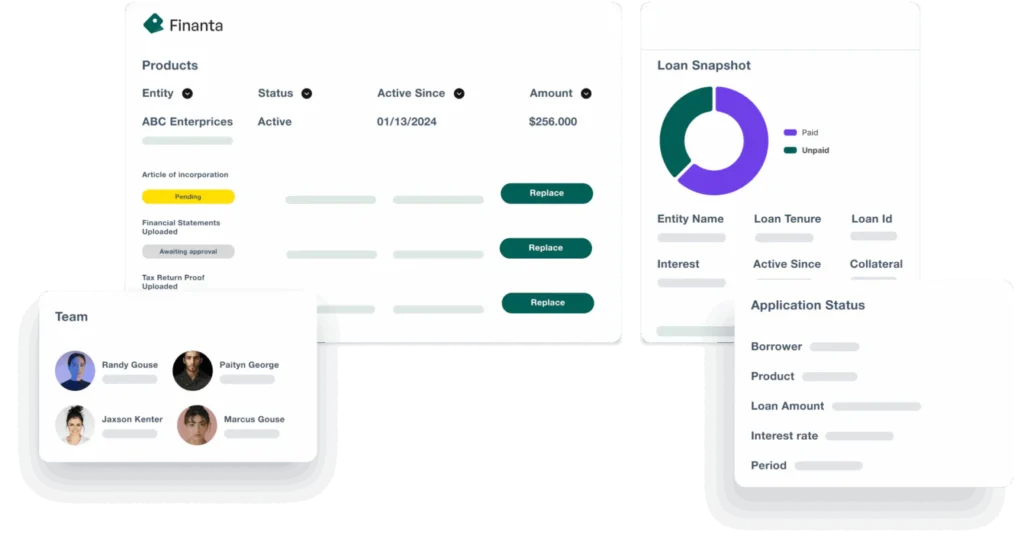
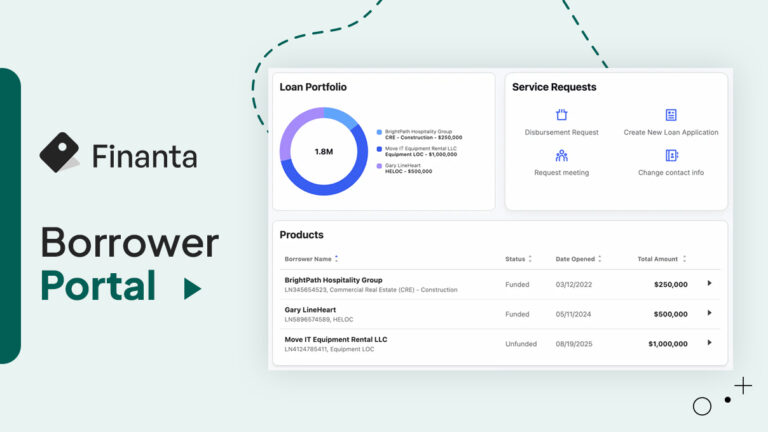
Borrower portals play an important role in creating a smoother and more convenient lending experience. Instead of managing documents and updates through emails and phone calls, borrowers can access everything they need through one secure platform.
– Centralized information: Borrowers can access loan details, documents, tasks, and updates in one place.
– Easy document submission: Securely upload financial statements, tax returns, and other required documents.
– Real-time updates: Track loan progress and see what actions are still required.
– Better communication: Connect with the lending team through secure messaging.
– Automated notifications: Receive reminders about missing documents, deadlines, payments, and important updates.
– Self-service access: Find loan information and complete tasks without constantly contacting the lender.
– Personalized experience: Provide borrowers with relevant tasks, information, and updates based on their loan.
– Faster processing: Reduce manual data entry, email exchanges, and administrative delays.
A borrower portal makes the lending journey more transparent, organized, and user-friendly while helping lenders deliver better service and operate more efficiently.
See How Finanta Helps Community Banks and Credit Unions Close the Borrower Experience Gap
Finanta is the commercial lending platform built specifically for community banks and credit unions — white-labeled, quick to deploy, and designed to amplify the relationship advantage rather than replace it. From multi-collateral origination through self-service borrower portal and post-funding servicing, every capability is built for the way relationship lenders actually work.
Book a demo to see the platform in the context of your institution, or explore the platform to understand the full capability set.
Frequently Asked Questions
Q: How can community banks improve the borrower experience without losing their relationship advantage?
The key is deploying technology that handles administrative tasks — document collection, status tracking, routine servicing requests — so that relationship managers spend their time on high-value borrower interactions rather than paperwork. The J.D. Power 2025 research found that lenders who perfected hybrid engagement, blending high-touch relationships with intelligent digital infrastructure, earned 2.3x repeat business rates compared to those who engaged borrowers only at the application stage. A self-service borrower portal built on the right platform delivers the digital experience without displacing the relationship that drives it.
Q: Why is borrower experience important in lending?
Borrower experience is important because it directly impacts customer satisfaction, retention, and loan conversion rates. A smooth and transparent experience reduces drop-offs, builds trust, and encourages repeat borrowing.
Q: How Does a Loan Management System Enhance the Borrower Experience?
A loan management system improves borrower experience by automating workflows, providing real-time loan tracking, centralizing communication, and reducing manual errors. This results in faster approvals, better transparency, and improved customer satisfaction.
Q: How are digital mortgage processes improving borrower experience?
Digital mortgage processes improve borrower experience by enabling online applications, e-signatures, automated approvals, and real-time updates. These features reduce paperwork, speed up approvals, and create a seamless lending journey.
Q: What is the community bank borrower experience gap and why does it matter?
The community bank borrower experience gap is the disconnect between the high-quality relationship that community banks and credit unions deliver in person and the fragmented digital experience many of their borrowers encounter when they apply for or manage a commercial loan. It matters because borrowers form their digital expectations from every service they use, and a gap between the relationship promise and the digital reality erodes the trust that the institution has built over years. The Federal Reserve Banks’ 2024 Small Business Credit Survey shows that borrower satisfaction is declining across lender types, and community institutions are not exempt from that pressure.
Q: How does a borrower portal help community banks retain commercial borrowers?
A properly built borrower portal gives commercial borrowers real-time visibility into their loan status, a secure environment for document exchange, self-service handling of routine requests like payoff letters and ACH updates, and proactive notifications that keep them informed without requiring them to call. These capabilities directly address the friction points that cause borrowers to feel underserved even at institutions where the relationship quality is genuinely high. Finanta’s commercial lending platform delivers all of these within a white-labeled environment that the borrower experiences as the institution’s own platform.
Q: What Features Improve Borrower Experience?
Key features that improve borrower experience include real-time data access, two-way document management, self-service tools, proactive notifications, multi-user access, and seamless integration with loan management systems.
Q: What are the benefits of a borrower portal?
A borrower portal improves borrower experience by centralizing communication, enabling document sharing, providing real-time updates, and reducing manual processes. It helps lenders improve efficiency while enhancing customer satisfaction.
Q: What is the future of borrower experience?
The future of borrower experience lies in digital-first lending, automation, real-time data access, and hybrid models that combine human support with advanced technology. Lenders focusing on these areas will achieve higher customer satisfaction and retention.
Q: What should community banks look for in a commercial lending technology platform?
A platform built for community institutions should offer multi-collateral depth across the loan types community banks actually write, white-label deployment under the institution’s own brand, a self-service borrower portal with real-time LMS integration, and a plug-and-play architecture that connects to marketplace services without requiring a custom build. The pricing model matters too: a pay-as-you-go SaaS structure makes the investment accessible without the capital commitment of enterprise systems designed for much larger institutions. Finanta’s community bank lending platform was built specifically for this institutional profile.
Found this useful?Share it with your team and network.